
Project Overview
Maintaining consistent pressure in firefighting networks is
critical for safety and operational readiness. At a University Campus in Abu
Dhabi, a sudden pressure drop in the system signalled a potential issue that
required immediate investigation and resolution.
The Challenge
The firefighting network was unable to maintain stable
pressure, with pressure dropping by 1 bar every three minutes. Given the pipe
specifications—approximately 180–200 mm in diameter and buried at a depth of 2 to 3 meters—identifying the exact source of the problem posed a technical
challenge.
The client had already conducted step testing, successfully
narrowing down the suspected leak area to a 600-meter section of the network.
The next step was precise leak detection.
Our Approach
A comprehensive acoustic survey was carried out across the
identified pipeline section to detect variations in sound patterns associated
with potential leaks. Advanced listening equipment was used along the route to
capture subtle noise signals, while additional checks at accessible points
helped assess internal pipeline conditions.
By comparing acoustic data across the entire section, the
team was able to identify anomalies and accurately pinpoint the most likely
leak location, minimizing unnecessary excavation.
The Result
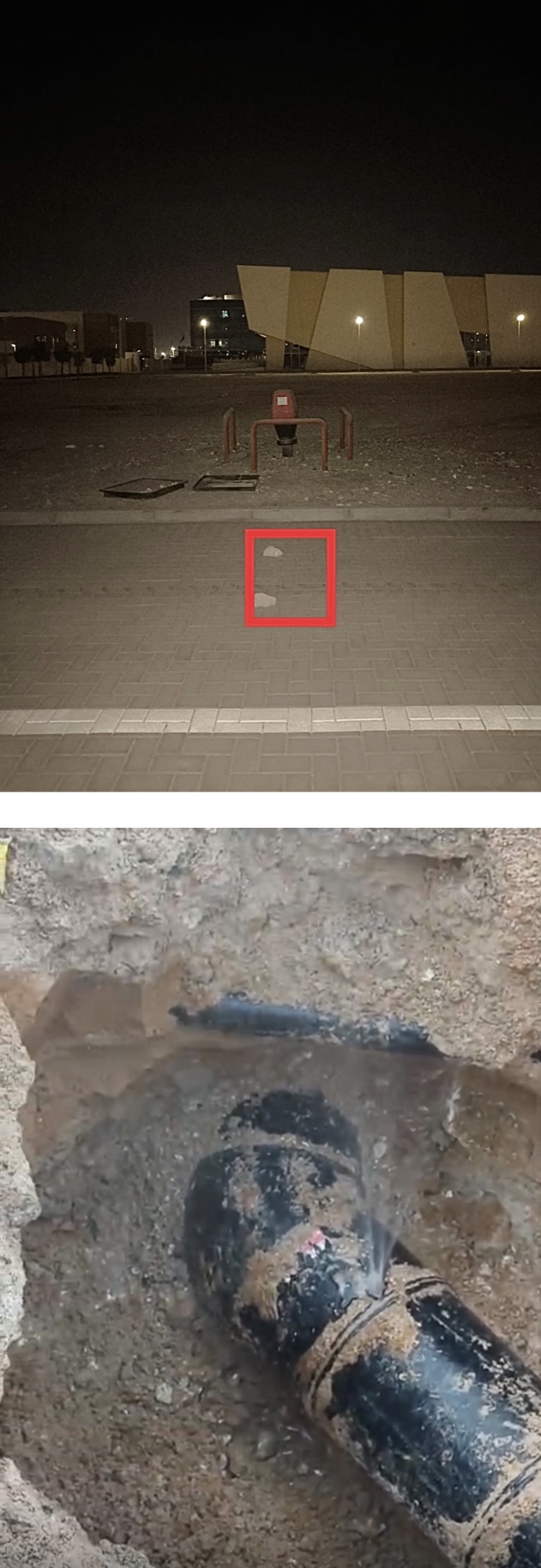
The survey identified one location with significantly higher
noise levels than the rest of the network—indicating a likely leak point.
Following excavation at the identified spot, the leak was
successfully located and repaired, restoring the integrity and pressure
stability of the firefighting system.
Outcome
- Leak accurately detected within a 600-meter section
- Minimal excavation required due to precise identification
- Rapid repair and restoration of system pressure
- Enhanced reliability of the firefighting network
This project highlights the effectiveness of acoustic leak detection methods in minimizing disruption while delivering fast, accurate results.